
Nov 11 Teams traffic automatically fails over onto the gateway servers shared with Exchange Online (01:07 UTC Nov 12), per Microsoft's preliminary reportConfirmed
Incidents / Outage ·
Was the Microsoft 365 outage a cyberattack?
Also reported as the Microsoft outage.
Is it a hack? The short answer
No sign of a hackAll the public evidence says no. Microsoft says it was a technical failure, and the US government said on Nov 18 that the outage was not a cyberattack. Microsoft's final report, dated Nov 20, also says it was not a cyberattack.
Large
How well supported Confirmed
Rests on The outage was a cyberattack, hack or DDoS · Microsoft's preliminary report: three factors together · Microsoft said it was not related to cyber activity or AI · Microsoft's final report says it was not a cyberattack
This is the current answer, not a final verdict. A final verdict is published only after the site's owner has reviewed the evidence.
What happened?
The latest ·
Reuters reports that Microsoft declared an internal "Code Red" after the outage.
- ~24 hoursLength of the outage11:20 AM ET Nov 12 to 11:10 AM ET Nov 13
- 70+Countries reporting problemsBBC News
- 80%+Gateway servers unresponsive at worstMicrosoft's preliminary report
- ~14%Gateway capacity already out of serviceMicrosoft's preliminary report
- Nov 20Final report releasedMicrosoft, per GeekWire
Timeline of the Microsoft 365 outage
17Nov 12 Microsoft posts that it is investigating Teams problems in North AmericaReported
Nov 12 Incident start: high-priority alert for Exchange Online (16:20 UTC), per Microsoft's preliminary reportConfirmed
Nov 12 Microsoft posts that it is investigating Exchange Online mailbox access problems in the AmericasReported
Nov 12 Microsoft pauses all ongoing and planned deployments and configuration changes (19:00 UTC), per its preliminary reportConfirmed
Nov 13 Microsoft identifies a fix that reverts the defective change and starts applying it (07:20 UTC), per its preliminary reportConfirmed
Nov 13 Microsoft extends the email timeout to 48 hours to preserve delayed mailReported
Nov 13 Microsoft says there is no indication of malicious or cyber activityReported
Nov 13 Incident end: customers no longer seeing active impact (16:10 UTC), per Microsoft's preliminary reportConfirmed
Nov 13 Microsoft apologizes and says it was a technical issue not related to cyber or AI / agentsReported
Nov 14 Microsoft says service is restored to the remaining customers and regionsConfirmed
Nov 14 Microsoft Threat Intelligence warns of phishing emails exploiting the outageReported
Nov 16 Microsoft says its preliminary post-incident report is available in the admin centerReported
Nov 18 White House publishes officials' statements that the recent outages were not a cyberattack and are unrelatedDebunked
Nov 18 Azure status page shows no active events when checkedConfirmed
Nov 20 Microsoft's final post-incident report is dated Nov 20Confirmed
Nov 20 Microsoft's service health records for both incidents show a new notice that a post-incident report has been published (01:04 UTC Nov 21)Reported
Does it affect me?
Most Microsoft 365 business, school and government users who rely on Exchange Online or Outlook for email. This was a service outage, not a breach. Be wary of emails about the outage that ask you to click to restore held messages.
How big is it?
Large
Exchange Online email is a service many organizations and governments rely on every day. Microsoft says most users were affected for about 24 hours, and problems were reported in at least 70 countries. This is actual impact, not potential.
What we know, and what we don't
Known so far
- Exchange Online and Outlook were down for most users from 11:20 AM ET Nov 12 to 11:10 AM ET Nov 13, per Microsoft's report. evidence
- Most users could not reach their mailboxes, and parts of Teams, Copilot, SharePoint and OneDrive were also affected. evidence
- Microsoft's preliminary report blames a latent defect from a July update, set off by extra traffic and reduced capacity. This is Microsoft's own finding. evidence
- Microsoft's final report, dated Nov 20, gives the same cause and says the outage was confirmed not to be a cyberattack. This is Microsoft's own finding. evidence
Not known yet
- Why the Teams routing issue in Microsoft's US East region happened, and what the July update was meant to fix. The final report does not say.
- Whether any independent body will publish its own finding on the cause. None has; the answer that it was not a cyberattack rests on Microsoft's report and the US government's statement.
- Exactly how many users and organizations were affected.
- When Microsoft's promised fixes, such as smaller fault zones and separate gateway pools for each workload, will be in place. Its final report dates several for early 2027.
- Whether the phishing campaign stole any credentials. Microsoft says this has not been confirmed.
Everything that has been said
Every claim on this page, by label · 23
- Confirmed9
- Reported10
- Rumor1
- Debunked2
- Not established1
What caused it? Cause and hack claims
10ConfirmedMicrosoft's preliminary report: three factors togetherMicrosoft's preliminary report blames three things together: a latent defect from a July update to its networking gateway servers, extra load after a Teams failover, and nearly 14% of gateway capacity already out of service.
Why it supports The report's Root Cause section lists these three factors.
According to Microsoft's preliminary report, three things together caused the outage: a latent defect in a July update made for Microsoft 365 networking gateway servers, extra load after Teams failed over to the same gateway about 15 hours earlier, and nearly 14% of gateway capacity already out of service for an unrelated reason. This is Microsoft's own analysis. A third-party copy of Microsoft's final report, dated Nov 20, gives the same account and adds peak North American traffic as a fourth condition (c020). A Microsoft executive vice president posted a public summary of the same findings on X, reported by ABC News and The Verge.
ConfirmedMore than 80% of gateway servers were unresponsiveMicrosoft's preliminary report says more than 80% of the gateway servers were unresponsive at the lowest point, and that safeguards between regions did not stop the failure from spreading worldwide.
Why it supports The report states both points in its Root Cause section.
ReportedMicrosoft said it was not related to cyber activity or AIMicrosoft said the outage was "a technical issue not related to cyber or AI / agents", introduced during an earlier network capacity upgrade and surfaced by a recent network change.
Why it supports Microsoft's official X account posted this statement on Nov 13.
Microsoft also sent the statement to BBC News, and it appears in the final status text of both incidents. Labeled Reported, not Confirmed: its official source is a post on a social account, which the site's rules treat as a lead, and it does not have two independent sources besides.
ReportedNo sign of malicious activity, Microsoft said during the outageDuring the outage, Microsoft's status updates said there was no indication or evidence of malicious or cyber activity.
Why it supports Microsoft's official status account said there was no indication the outage was the result of malicious or cyber activity.
Labeled Reported, not Confirmed: its official source is a post on a social account, which the site's rules treat as a lead, and it does not have two independent sources besides.
ReportedEngineers investigated and ruled out an attackMicrosoft engineers looked into possible attack routes, consulted DDoS specialists, and ruled out an attack using crash reports and logs.
Why it supports The Verge reports this from sources familiar with the response.
Single outlet with unnamed sources.
DebunkedThe outage was a cyberattack, hack or DDoSThe US government says the recent outages were not a cyberattack, and Microsoft says this one was a technical issue. No independent forensic report has been published.
Why it supports The White House quotes the Director of National Intelligence saying the recent outages are not a cyberattack, and the Secretary of State saying there is zero evidence any of them involve hackers or hostile actors.
Also contradicted by Microsoft (c007, c008). No independent forensic report has been published; this label will be revisited if new official findings appear. The White House quotes the Director of National Intelligence saying the recent outages are not a cyberattack, and the Secretary of State saying there is zero evidence any of them involve hackers or hostile actors and that the Microsoft incident is unrelated to the FAA's.
RumorIt was caused by AI-written code or AI agentsPeople outside Microsoft wondered whether careless AI coding was to blame. Microsoft says the outage was not related to AI or agents; no one else has addressed it.
Why it supports The Verge reports people outside Microsoft wondering whether the outage came from a cyberattack or careless AI coding.
Microsoft says the outage was not related to AI or agents (c007), and its preliminary report blames a July fix without saying how it was written. Not labeled Debunked because only Microsoft has addressed it. Microsoft's final report also says the change behind the outage was not caused by AI tooling (c021).
DebunkedIt was part of a coordinated attack with the FAA and bank outagesThe White House says officials see no indication of a coordinated cyberattack, and the Secretary of State says the Microsoft incident has nothing to do with the FAA's.
Why it supports The White House says officials see no indication of a coordinated cyberattack, state-sponsored activity or malign actor, and the Secretary of State says the Microsoft incident has nothing to do with the FAA's.
This is the US government's account, not an independent technical analysis. NBC News also reports security researchers saying the simpler explanation is brittle systems.
ConfirmedMicrosoft's final report: a July defect, set off by three conditions togetherMicrosoft's final report, dated Nov 20, blames a latent defect in a July update to its gateway servers, set off by capacity lost to planned maintenance, a Teams failover and peak North American traffic.
Why it supports The report's Executive Summary and Root Cause sections name the defect and the three conditions; GeekWire, KIRO 7, Neowin, The Guardian, The Register, The Seattle Times and GEroundtable report the same account.
The report says the defect caused lock contention inside an internal Windows process that used up the servers' CPU and memory. It hit only newer servers with more cores, and load testing on older hardware missed it. The defect does not apply to standard Windows deployments. Nearly 14% of gateway capacity was out of service for planned maintenance. At 1:07 AM UTC on Nov 12, a routing issue in the US East region moved Teams traffic worldwide onto the gateways Exchange Online uses. Compared with the preliminary report (c005), the final report names the maintenance as the reason for the missing capacity and adds peak traffic as a condition. This is Microsoft's own analysis. Microsoft's own copy needs a Microsoft 365 admin-center login (not checked: login required). GeekWire, an established outlet, reported on the final report on Nov 21 and gives the same account, including the July defect, the newer high-core servers, the 14% capacity lost to routine updates and the US East Teams routing issue. KIRO 7, a Seattle TV newsroom, also reported on the final report on Nov 21, quoting its line that Microsoft's testing "did not adequately represent the combination of hardware and traffic mix encountered during this incident". Neowin, an established tech news outlet, reported on the final report on Nov 22 with the same account: a July 2026 defect, reduced server capacity and extra Teams traffic set off a cascade that left more than 80% of the gateway servers unresponsive at one point. The Guardian, in a Nov 22 explainer on the recent run of outages, gives the same outline: an upgrade in July left in place a software bug that lay dormant for months until a string of coincidences triggered it and overwhelmed Microsoft's servers. The Register reported on the final report on Nov 23 with the same account: a July change affecting Microsoft's gateway configuration, not standard Windows, load tests on older lower-core hardware, and more than 80 percent of North American gateway servers unresponsive at the worst point. The Seattle Times also reported on it on Nov 23, describing the July bug, the 14% of servers out for updates and the Teams traffic shift. (The Seattle Times notes that Microsoft Philanthropies underwrites some of its journalism projects.) Next, an established French tech outlet, compared the two reports on Nov 24 and gives the same account, with four factors: the July defect, capacity out for planned maintenance, the Teams traffic shift and peak North American traffic.
ConfirmedMicrosoft's final report says it was not a cyberattackMicrosoft's final report says the incident "was confirmed not to be caused by a cyberattack", that Microsoft found no evidence of malicious activity, and that the change behind it was not caused by AI tooling.
Why it supports The report's Executive Summary says the incident was confirmed not to be caused by a cyberattack; GeekWire and The Seattle Times quote that line, and GEroundtable, KIRO 7 and The Register report the same.
The report also says no enterprise email was permanently lost and customer data at rest was not affected; some delayed messages to consumer mailboxes inactive for more than 30 days expired. This is Microsoft's own finding, not an independent forensic report. Microsoft's own copy needs a Microsoft 365 admin-center login (not checked: login required). GeekWire quotes the same lines from the final report. KIRO 7 also reports that Microsoft has maintained the outage was not related to a cyberattack or AI agents. The Seattle Times (Nov 23) quotes the same line and the AI-tooling statement, and says that as of Nov 23 there was no indication the Microsoft, FAA, JPMorgan Chase and Apple disruptions were related. The Register (Nov 23) reports the final report's account that some delayed messages to consumer mailboxes inactive for more than 30 days expired with non-delivery reports, while all queued enterprise messages were delivered. Next (Nov 24) also reports that the final report explicitly says it was not a cyberattack and that the changes were not produced by AI.
Questions and rumors
7ConfirmedWas the Microsoft 365 outage a cyberattack?All the public evidence says no. Microsoft says it was a technical failure, and the US government said on Nov 18 that the outage was not a cyberattack. Microsoft's final report, dated Nov 20, also says it was not a cyberattack.
ConfirmedWas there a global Microsoft 365 outage on Nov 12 to 13?Yes, about 24 hours, per Microsoft's own report.
ConfirmedWhat caused it, according to Microsoft?A latent defect from a July update, set off by reduced capacity, extra load from a Teams failover and peak North American traffic, all at once.
RumorWas it caused by AI-written code or AI agents?Microsoft says no. No one else has addressed it.
DebunkedWas it part of a coordinated attack with the FAA and bank outages?The US government says the incidents are unrelated.
ReportedDid criminals try to exploit it?Microsoft's security team says so: phishing emails posed as outage notices. That was separate from the cause.
Not establishedWas there a major Azure outage on Nov 18?We found none. Azure's status page showed no active events, and no outlet we found reported one.
What would settle it An incident entry for Nov 18 in Azure's status history, or a report from an established outlet.
Rests on A major Azure outage happened on Nov 18 · Azure's status page showed no events on Nov 18
What happened?
4ConfirmedThe outage ran about 24 hours, Nov 12 to 13Microsoft puts the outage window at 4:20 PM UTC on Thursday, Nov 12 (11:20 AM ET) to 4:10 PM UTC on Friday, Nov 13 (11:10 AM ET), under incident IDs EX1550543 and MO1550821.
Why it supports Microsoft's preliminary post-incident report gives these incident start and end times.
Third-party copies: Microsoft's own copy of the report needs a Microsoft 365 admin-center login (not checked: login required). The university mirror shows the same end time in Microsoft's final status text, but its record header lists a 10:05 AM UTC start for EX1550543; we use the report's 4:20 PM UTC.
ReportedMicrosoft's first public noticesMicrosoft first posted about Teams problems in North America at 10:40 AM ET on Nov 12, and about Exchange Online mailbox access problems in the Americas at 12:54 PM ET.
Why it supports Microsoft's official status account posted the Teams investigation notice at this time.
Labeled Reported, not Confirmed: its official source is a post on a social account, which the site's rules treat as a lead, and it does not have two independent sources besides.
ConfirmedExchange Online email took the main hitMost users could not reach their Exchange Online mailboxes through Outlook or other mail apps, and email delivery was delayed. Parts of Copilot, Teams, SharePoint and OneDrive that rely on Exchange were also affected.
Why it supports The report's User Impact section describes the primary and secondary impact in these terms.
Exchange Online took the main hit: most users could not reach their mailboxes through Outlook or other mail apps, and email delivery was delayed. Parts of Copilot, Teams, SharePoint, OneDrive, Defender and Purview that rely on Exchange Online were also affected. Third-party copy of Microsoft's report; see c001.
ReportedProblems reported in at least 70 countriesBBC News reports that Microsoft's email, Teams and Copilot were inaccessible in at least 70 countries, based on outage-tracker reports.
Why it supports BBC News reports Microsoft's email, Teams and Copilot were inaccessible in at least 70 countries.
Based on outage-tracker reports. AP reported more than 70 countries from Downdetector data, but its page blocked our check.
What happened after the outage?
7ReportedPhishing emails posed as outage noticesCriminals sent phishing emails posing as Microsoft 365 outage notices and falsely warning that held mail would be deleted. Microsoft says stolen credentials and malware have not been confirmed.
Why it supports Microsoft Threat Intelligence describes the campaign, its subject lines and sender domains.
Criminals sent phishing emails posing as Microsoft 365 outage notices that cited the real incident ID EX1550543 and falsely warned that held mail would be deleted. Microsoft says stolen credentials and malware have not been confirmed. This was a separate, opportunistic scam that exploited the outage. It did not cause the outage. Labeled Reported, not Confirmed: its official source is a post on a social account, which the site's rules treat as a lead, and it does not have two independent sources besides.
ReportedMicrosoft extended its email timeout to 48 hoursMicrosoft extended its email timeout to 48 hours so that mail delayed during the outage would not be returned as undeliverable.
Why it supports Microsoft's official status account posted the 48-hour extension.
Labeled Reported, not Confirmed: its official source is a post on a social account, which the site's rules treat as a lead, and it does not have two independent sources besides.
ReportedA preliminary report was released inside the admin centerMicrosoft released a preliminary post-incident report on Nov 15 to 16, available only inside the Microsoft 365 admin center.
Why it supports Microsoft's official status account said the preliminary report was available in the admin center under MO1550821 and EX1550543.
We did not log in to read it. The text we cite is a third-party copy (c001). Labeled Reported, not Confirmed: its official source is a post on a social account, which the site's rules treat as a lead, and it does not have two independent sources besides.
ConfirmedThe final report is due Nov 20Microsoft's preliminary report says the full list of repair items will come with its final report, due Nov 20, 2026.
Why it supports The preliminary report's repair-items table lists the full list of repair items as due 11/20/2026 with the final report.
On Nov 20 at 8:04 PM ET, Microsoft's service health records for both incidents showed a new notice that a post-incident report had been published. A third-party copy of a report dated Nov 20 is now public (c020), and GeekWire reports that Microsoft released its final report on the evening of Nov 20. Microsoft's own copy needs a Microsoft 365 admin-center login (not checked: login required).
ReportedMicrosoft posted a new post-incident report notice on Nov 20At 8:04 PM ET on Nov 20, Microsoft's service health records for both incidents gained a new notice: "A post-incident report has been published." A third-party copy of a report dated Nov 20 has since appeared (c020).
Why it supports The mirror's records for EX1550543 and MO1550821 each show a second "A post-incident report has been published" notice, timed 01:04 UTC on Nov 21 (8:04 PM ET on Nov 20).
Seen on a university mirror that copies Microsoft's service health notices but not the reports themselves. The first such notice, at 11:47 PM ET on Nov 15, came with the preliminary report. Microsoft's own copy needs a Microsoft 365 admin-center login (not checked: login required). Labeled Reported: it rests on one third-party copy, and the notice does not itself say the report is the final one.
ConfirmedSome email security checks were weaker during the outageMicrosoft's final report says that during the outage, Safe Links may have offered users a "Skip verification" option, depending on their organization's policy, and that post-delivery email protection (ZAP) was delayed.
Why it supports The final report's list of effects on Microsoft Defender for Office 365 names the Safe Links "Skip verification" option and the ZAP delay; Next reports the same two points.
The report says users may have had trouble opening links protected by Safe Links, and that ZAP, which removes harmful messages after delivery, may not have acted as quickly as usual because updated threat information was not available. This describes protections working less well during a technical outage. It does not say anyone took advantage of it, and we found no report that anyone did. Next, an established French tech outlet, reported both points from the final report on Nov 24. Microsoft's own copy needs a Microsoft 365 admin-center login (not checked: login required).
ReportedMicrosoft declared an internal "Code Red" after the outageReuters reported on Nov 24 that internal Microsoft memos it reviewed declare a "Code Red" drive to change how the company prevents and responds to major service failures after the Nov 12-13 outage.
Why it supports Reuters says it reviewed the internal memos and quotes them; it also quotes a Microsoft spokesperson responding to the report.
Per Reuters, one memo calls the outage the most customer-impacting incident in the history of Exchange Online. Another says responders exchanged more than 11,000 messages across 11 Teams chats and struggled to keep a single picture of what was happening. The memos describe five workstreams, including load shedding, splitting traffic by region and faster recovery, and a goal of resolving future worldwide incidents within an hour. Microsoft has not published the memos. A company spokesperson responded to Reuters without disputing them. The same Reuters report repeats that Microsoft said the incident was not related to cyber activity or AI agents. Ars Technica and The Verge reported the memos citing Reuters. Labeled Reported: it rests on one outlet's review of documents that are not public.
No Azure outage found on Nov 18
2People were also asking about a Microsoft Azure incident around Nov 18. We checked and found none. The outage people were discussing that week appears to be this one.
ConfirmedAzure's status page showed no events on Nov 18On Nov 18, Microsoft's Azure status page showed no active events, and Azure's status history listed no incident review newer than Sep 30, 2026.
Why it supports The Azure status page read "There are currently no active events" when we checked.
Not establishedA major Azure outage happened on Nov 18We found none. Azure's status page showed no active events, and no outlet we found reported a major Azure outage that day.
Why it supports Microsoft's Azure status page showed no active events, and we found no outlet reporting a major Azure outage that day.
Third-party outage trackers showed only scattered user reports on Nov 18. The Microsoft outage people discussed that week was this Nov 12 to 13 Microsoft 365 outage.
Official statements
We are deeply sorry for the disruption this incident has caused our customers and partners. [...] This was a technical issue not related to cyber or AI / agents. The incident was introduced by an issue during an earlier network capacity upgrade that surfaced following a recent network change.
First, a latent defect caused Windows servers to become overwhelmed and unresponsive under certain load conditions. [...] This defect was the result of a fix that was prepared specifically for Microsoft 365 networking gateway servers; neither the underlying defect nor the fix applies to broader Windows deployments.
This incident was confirmed not to be caused by a cyberattack, and we found no evidence of malicious activity. This change was not caused by AI tooling.
This is not a cyberattack, and this is not a coordinated effort by a nation state.
What we checked and did not find
- Microsoft's own copy of the preliminary post-incident report. Not checked: it needs a Microsoft 365 admin-center login. We cite a third-party copy, labeled as such.
- Microsoft's own copy of the final post-incident report, dated Nov 20. Not checked: it needs a Microsoft 365 admin-center login. We cite a third-party copy, labeled as such.
- Coverage of the final report by established news outlets. Not found as of 8:50 AM ET on Nov 21.
- Any credible claim of a hack, breach or attacker behind the outage. Not found.
- A major Azure outage on Nov 18, 2026. Not found.
- AP's article on the recovery. Not checked: access blocked.
Where this comes from
- Microsoft preliminary post-incident report (third-party copy, opensecurity.es)
- Microsoft service health text (University of Pennsylvania mirror)
- BleepingComputer
- Microsoft 365 Status (official X account)
- Microsoft 365 Status (official X account)
- SecurityWeek
- BBC News (live page)
- The Register
- The Verge
- Microsoft (official X account)
- Microsoft 365 Status (official X account)
- The White House
- BBC News
- Microsoft Threat Intelligence (official X account)
- Microsoft 365 Status (official X account)
- Microsoft 365 Status (official X account)
- Azure status page
- Azure status history
- Microsoft 365 Status (official X account)
- ABC News
- AP
- NBC News
- Microsoft final post-incident report, dated Nov 20 (third-party copy, researcher's public site)
- GEroundtable
- GeekWire
- KIRO 7 News Seattle
- Neowin
- The Guardian
- The Register
- The Seattle Times
- Next
- Reuters (via CNA)
Every update
- Reuters reports that Microsoft declared an internal "Code Red" after the outage. Reuters reported on Nov 24, from internal memos it reviewed, that Microsoft declared a "Code Red" drive to overhaul how it prevents and responds to major outages. One memo calls this the most customer-impacting incident in Exchange Online's history. New claim c023, labeled Reported because the memos are not public. Reuters repeats that Microsoft said the outage was not related to cyber activity. No other label changed and the main answer is unchanged.
- The answer is unchanged: all the public evidence says the outage was not a cyberattack. Its label now reads Confirmed. A labelling rule decided by the owner on Nov 24: a story's main answer carries Confirmed, Reported or Not established, and the label says how well the answer shown is supported. This answer carried Debunked, which is the label of the claim that the outage was an attack. It now carries Confirmed, because Microsoft's final report and a US government statement both say it was not an attack. That claim itself stays Debunked. No finding and no source changed.
- Microsoft's final report says some email protections, Safe Links and post-delivery cleanup, worked less well during the outage. Next (Nov 24) compared Microsoft's preliminary and final reports and gives the same account of the cause, and quotes the final report's line that it was not a cyberattack. Added as a further source for c020 and c021. New claim c022: the final report says Safe Links may have offered a "Skip verification" option and post-delivery email protection (ZAP) was delayed during the outage; no report says anyone exploited this. No label on an existing claim changed and the main answer is unchanged.
- Microsoft's final report blames a July server defect, not a cyberattack, The Register and The Seattle Times report. The Register (Nov 23) and The Seattle Times (Nov 23), both established outlets, reported on Microsoft's final post-incident report. Both give the same account of the cause: a July defect on newer gateway servers, capacity out for maintenance and a Teams traffic shift. The Seattle Times quotes the report's line that the incident was not caused by a cyberattack. Added as further sources for c020 and c021. No label changed and the main answer is unchanged.
- The Guardian, an established outlet, now describes the cause given in Microsoft's final report. The Guardian published an explainer on Nov 22 about the recent run of outages. It says a July upgrade left a software bug in place that lay dormant for months until a string of coincidences triggered it and overwhelmed Microsoft's servers, which matches Microsoft's final report. Added as a further source for c020 (the final report's account of the cause). No label changed and the main answer is unchanged.
- A third established outlet, Neowin, now reports on Microsoft's final report. Neowin reported on Microsoft's final post-incident report on Nov 22, giving the same account of the cause: a July 2026 software defect, reduced server capacity and extra Teams traffic, which together left more than 80% of the gateway servers unresponsive at one point. Added as a further source for c020 (the final report's account of the cause). No label changed and the main answer is unchanged.
- A second established outlet, KIRO 7, now reports on Microsoft's final report. KIRO 7 News Seattle reported on Microsoft's final post-incident report on Nov 21, giving the same account: a months-old software defect that testing missed, spread by systems meant to keep the network running, and not related to a cyberattack. Added as a further source for c020 (the final report's account of the cause) and c021 (the final report says it was not a cyberattack). No label changed and the main answer is unchanged.
- An established outlet now reports Microsoft's final report: a July defect caused the outage, and it was not a cyberattack. GeekWire reported on Microsoft's final post-incident report on Nov 21, giving the same account as the public copy: a July defect on newer gateway servers, set off by capacity lost to routine updates, a Teams failover and peak North American traffic, and a statement that the incident was confirmed not to be caused by a cyberattack. Label change: c020 (the final report's account of the cause) and c021 (the final report says it was not a cyberattack) moved from Reported to Confirmed, on GeekWire plus the public copy and GEroundtable. The main answer is unchanged.
- A copy of Microsoft's final report, dated Nov 20, is now public. It again blames a July defect and says the outage was not a cyberattack. A third-party copy of Microsoft's final post-incident report, dated Nov 20, appeared on a researcher's public site, and one small outlet summarized it. It names the same July defect as the preliminary report, set off by reduced capacity from planned maintenance, a Teams failover and peak North American traffic, and says the incident was confirmed not to be caused by a cyberattack. Added as two Reported claims until established outlets cover it. No other claim's label changed and the main answer is unchanged.
- Microsoft posted a new post-incident report notice on Nov 20, the day its final report was due; the report's text is not public yet. Microsoft's service health records for both incidents gained a second "A post-incident report has been published" notice at 8:04 PM ET on Nov 20, seen on a university mirror. Added as Reported. The report sits behind an admin-center login, so the page's account of the cause still rests on the preliminary report. No other claim's label changed and the main answer is unchanged.
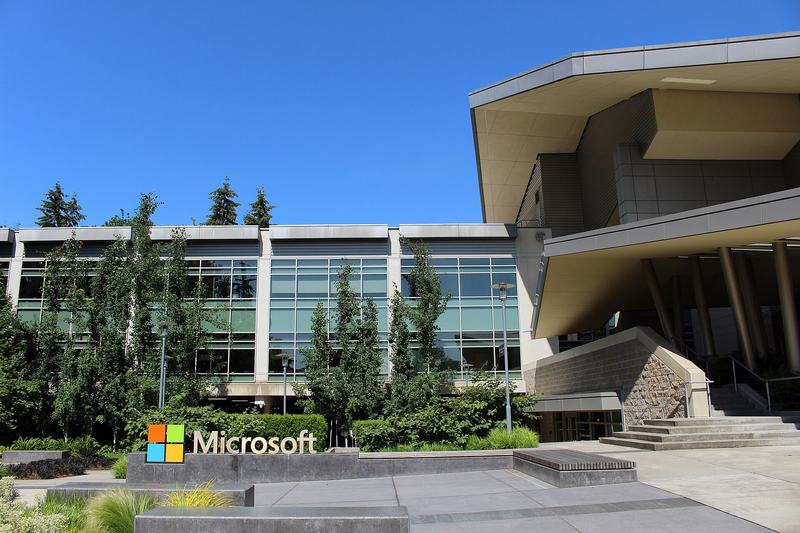
- A photograph now leads the page in place of the drawn picture. Building 92 at Microsoft's headquarters in Redmond, Washington, in May 2016. Its credit and licence are shown with it. No claim, label, source or answer was changed.
- A drawn picture naming the subject now leads the page. The page and its entry on the home page now carry a picture drawn by the site: the name of the subject over a simple drawing for the kind of thing it is. It is not a logo. No claim, label, source or answer was changed.
- Microsoft 365 is back to normal; Microsoft's final report on the outage is due Nov 20. Microsoft 365 has been back to normal since Nov 13, and Microsoft's final post-incident report is due Nov 20. Before first publication this page was moved to the site's data format and reviewed against the sourcing rules: 6 claims whose official source is a social post are labeled Reported, not Confirmed (c002, c007, c008, c013, c014, c015).
- AP's article and Microsoft's own copy of its report could not be checked; a third-party copy is cited. AP article not checked: access blocked (HTTP 403 to our check; fetch timed out). Microsoft's own copy of the preliminary post-incident report not checked: login required (Microsoft 365 admin center). A third-party copy is cited instead and labeled as such.
- Page drafted: Microsoft blames a months-old defect, and the US government says it was not a cyberattack. Page drafted from public sources, including Microsoft's official X posts. All source links re-checked Nov 18; AP blocked. The AI or agents claim is labeled Rumor, not Debunked, because only Microsoft has addressed it. No final verdict is applied; that needs the owner's approval. No major Azure outage found on Nov 18.
The raw files
For people and programs that want the data itself. Nothing on this page exists only here.
This report as MarkdownThe data folder on GitHubEvery change to this page